Safety is not, for example, only a feature of a new overhead crane. The safety of all existing cranes, and of the work carried out around them, can also be improved.
– New risk factors can emerge in crane working areas. In addition, structures, equipment or changes in working methods can create situations where the risk of collision increases, says Sales Manager Juuso Haapala.
There are ready-made solutions to these challenges, such as safety zones, load and motion limits for cranes, control solutions and warning systems.
– Our goal is always to prevent hazardous situations and to ensure that cranes operate safely even when production conditions change, Haapala continues.
Solutions to protect both equipment and personnel
Safety solutions can be roughly divided into two groups. Some solutions primarily protect equipment by preventing collisions and malfunctions. Others are designed to support personnel safety and reduce people’s exposure to hazardous situations.
– Various area monitoring systems and crane travel limits help prevent hazardous situations caused by cranes in the middle of production, Haapala explains.
Modern control and positioning solutions make it possible to manage the movements of several cranes operating in the same space. These collision avoidance solutions use crane position data and help prevent situations where cranes could interfere with each other’s operation. The safety of people working in the area is also extremely important.
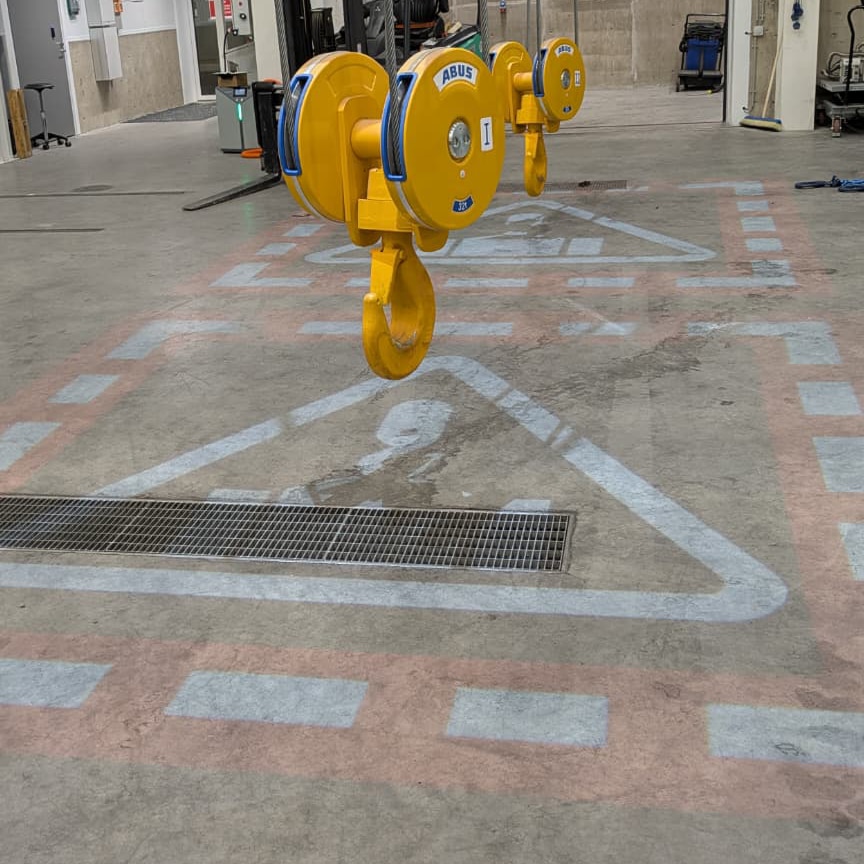
– Safety light projectors give a clear visual warning of a moving crane, improving safety in the working environment around cranes.
Cost-effective safety improvements
When safety solutions are implemented systematically, both operational reliability and production flow can be improved without significant changes to the crane structure itself.
– One of the most common misunderstandings is that safety can only be improved by buying a completely new crane. That is simply not true, Haapala emphasizes.
– Many safety-enhancing features can be retrofitted to existing cranes, allowing our customers to develop their current crane fleet step by step and cost-effectively.
Improving safety starts with identifying risks
Safety is easiest to improve when potential risks are identified early. Crane inspections often reveal deficiencies or areas for improvement which, once addressed, can reduce collision risks and support safe operation.
– When identified risks are acted on proactively and the right solutions are found, we can improve both employee safety and equipment service life, Haapala points out.
Crane safety is an investment in smoother production
Improving crane safety is not just a safety issue. It can also reduce downtime, prevent equipment damage and support uninterrupted production. The right solutions help to ensure that both people and equipment can operate safely in changing production environments, now and in the future.